Showing posts with label Exploitation film. Show all posts

Sunday, 10 February 2013

Exploitation films in a nutshell (part 3).


Psychedelic.
Means "mind manifesting". It is used to describe the state of consciousness typically experienced while under the the influence of drugs such as LSD, mushrooms, mescaline and cannabis. Consisting of different stages of ego-release and alterations of perception.
This word is also applied to art, movies and music that are inspired by or that enhance the psychedelic experience.

The psychedelic era occurred during the 60's and 70's but is generally regarded to be from 1965 to 1969.

Biker films in the 1960's.
The biker film genre of the 1950's was to be re-ignited again in the 60's. The psychedelic sixties brought even more changes into our culture. Movies got more violent and sex, drugs and rock and roll was to play a big part in influencing the minds of exploitation film makers of this era.
The major studios changed and more independent film makers got involved with low budget films aimed specifically for the youth who were filling the drive-in cinemas.
Some of the earliest biker films of this decade were actually British. Although lame in comparison to the later American films of this genre. These are the damned (1963) Directed by Joseph Losey is an early example.
There were several American biker themed films made in the early 60's including Beach party (1963), Scorpio Rising (Short. 1964) and Roustabout (1964). Although it wasnt until Russ Meyers Motor Psycho (1965) when biker flicks started to portray  the themes associated with exploitation films.

Motor Psycho (1965) Dir. Russ Meyer.
Although primarily known for his Sexsploitation flicks, Russ Meyers Motor Psycho is a serious attempt at drama  without any camp humour. The story involves three bad boy motorcyclists who get there kicks by raping women and generally being a nuisance in society.
It wasnt long after Motor Psycho was released that Roger Corman and American International Pictures were to exploit this lucrative market. The first and probably best known AIP film in this genre was The Wild Angels (1966), Directed by Roger Corman and starring Peter Fonda, Nancy Sinatra and Bruce Dern. AIP became interested in making a film about the Hell's Angels after seeing a photo on the cover of Life magazine for a biker's funeral.


The Wild Angels (1966) Dir. Roger Corman.


This role made Peter Fonda an American icon and  3 years after The Wild Angels was released Fonda was to reprise his leather clad motorcycling character once again in the now infamous and ultimate biker movie Easy Rider (1969). A landmark counterculture film, Easy Rider  explores the issues and tensions prevalent in the United States  during the 1960's and early 1970's such as drug use and hippie culture.
The film was released in the same year as the Woodstock festival and made in the same year as Robert Kennedy and Martin Luther King's assassinations. The build up to the Vietnam war was also to play a major part  in the collapse of the idealistic visions that America had adopted in the previous decade and early 60's. Easy Rider was one of the first films of it's kind to portray a downbeat and bleak vision of the future with promotion slogans for the film proclaiming " A man went looking for America and couldn't find it anywhere".

Easy Rider (1969) Dir. Dennis Hopper.
Still from Easy Rider. Starring Peter Fonda (right), Dennis Hopper (left) and Jack Nicholson (middle).
A short list of other Biker flicks of the 1960's.


The girls from thunder strip (1966).
Director, David L. Hewlitt. Best known for sci- fi films such as Wizard of Mars and Journey to the center of time and written by comic artist Pat Boyette. Released in 1970.
Plot: A vicious gang of murderous bikers goes up against a trio of beautiful bootlegging sisters. IMDB


Devil's Angels (1967).
Director, Daniel Haller and written by Charles B. Griffith.
The film follows Cody (John Cassavetes) and his motorcycle gang the Skulls after being forced to flee their home town when a member of the gang accidently kills a local citizen. Distributed by American International Pictures. IMDB


Hells Angels on wheels (1967).
Director, Richard Rush and written by R Wright Campbell (screenplay). Starring Jack Nicholson and Adam Roarke.
The film tells the story of a gas station attendant with a bad attitude who finds life more exciting after he is allowed to hang out with the Hells angels outlaw motorcycle club. The "Offical" Hells Angels approved film!!. IMDB


The Glory Stompers (1968).
Director, Anthony M. Lanza. Written by James Gordon White and John Lawrence.
Chino (Dennis Hopper) is a tough leader of a motorcycle gang who starts off a war when he abducts and mistreats the leader of the enemy biker gang, Darryl and his girlfriend. Things get violent when Darryl comes back for revenge. IMDB


Naked Angels (1969).
Director Bruce D Clark (and writer).
Mad dogs from hell hunting down their prey with a quarter-ton of hot steel between their legs. After being released from the hospital, a motorcycle gang leader sets out to avenge himself on the thugs who put him there in the first place.
The film's soundtrack was co-written by Jeff Simmons who eventually went on to become a member of Frank Zappa's Mothers of invention. IMDB


Other(non-biker) Psychedelic films


The Trip (1967).
Released by American International Pictures, Directed by Roger Corman and written by Jack Nicholson.
This psychedelic tribute to the properties of Lysergic acid diethylamide (LSD)  sees Peter Fonda play a disillusioned TV commercial director who decides to drop acid for the first time in the hope of finding some meaning in his life whilst going through a bitter divorce from his wife played by Susan Strasberg.


Psych-out (1968). Directed by Richard Rush. Written by
E.Hunter Willett and Betty Ulius (screenplay).
Another AIP Production starring Susan Strasberg, Dean Stockwell, Jack Nicholson and Bruce Dern.
Jenny(Strasberg)  plays a deaf runaway  who arrives in San Francisco in search for her brother Steve (Dern). She encounters Stoney (Nicholson) and his hippie band Mumblin Jim in a coffee shop. Stoney and his pals turn the square Jenny into a swinging drug taking  hippie chick. Along with their buddy Dave (Stockwell) they search for Steve amidst the psychedelic splendor of the Haight-Ashbury hippie haunts.


The Acid Eaters (1968).  Directed by Byron Mabe and produced by David F. Friedman. Although this film contains some bikers can't really be classed a proper biker flick. Three hippie couples leave there 9 to 5 jobs in order  to take LSD  and go on a psychedelic adventure.


Wednesday, 2 November 2011

Exploitation films in a nutshell ( Part 2 ). The 1960's Uncensored and Unleashed.


 Grindhouse theatres;
An American term for a theatre that mainly showed exploitation films. These inner-city theatres formally featured burlesque shows which included "bump and grind" dancing, leading to the term "grindhouse".
Grindhouses were known for non-stop programs of B movies, usually consisting of double features played back to back.
The original grindhouse theatres were located on 42nd street, New York.
Early 1960's Sexploitation.
The early pioneers of the nudie cutie movies were Russ Meyer (known as the king of the nudies) and Doris Wishman, a self-taught filmaker described as the "female Ed Wood" and one of the most prolific female film directors of all time.
By the end of the 1950's there was a move away from the nudist camp type of film. The first non-naturalist feature film to openly exhibit nudity was The immoral mr Teas (1959) directed by Russ Meyer and considered to be the first pornographic feature.
Other notable nudie-cutie directors of this period were Herchell Gordon Lewis  who went on to create a new genre in horror film and Ed Wood considered the worst director in movie history.
An early sexploitation film with considerable influence was the British psychological thriller Peeping Tom (1960) directed by Michael Powell. The film is about a voyeuristic serial killer who murders women while using a portable movie camera to record their dying expressions of terror. It's controversial subject was panned by critics at the time and like Tod Browning after he made Freaks (1932) effectively ended Powells career as a director. Martin Scorsese re-released the film in 1979 and is now regarded as a masterpiece and cult classic. The films use of a hand held camera was a ground breaking technique of the time and has influenced many films since.

Still taken from Peeping Tom (1960) Directed by Michael Powell.

Another notable sexploitation film of the early 1960's  was Promises! Promises! (1963) Directed by King Donovan and starring Jayne Mansfield who appeared nude and became the first mainstream American actress to appear nude in a starring role. Photographs of a naked Mansfield on the set were later published in Playboy magazine.
By the mid 1960's  a different kind of sexploitation film emerged which was more harder edged than previous nudie-cutie films. Also known as "Roughies" for their explicite subject matter usually consisting of rape,violence, abduction and sadism. These films were designed to be the opposite of the colourful "nudie-cuties". Russ Meyers Lorna (1964) is an early example of  a "Roughie" film. Shot in black and white ( a trademark for the roughie films of this period ) and starring the voluptuous  Lorna Maitland who starred in 3 Meyer movies including his next film MudHoney (1965).


 Over the next decade Meyer made nearly 20 movies with his odd blend of humer, Large-breasted women and sleaze, including the cult classic Faster, Pussycat! Kill! Kill! (1965) about 3 wild strippers with lots of attitude and plenty of cleavage who go on a turbo-charged murderous rampage driving across the dessert in fast cars.  The exploitation director John Waters later described Faster, Pussycat! Kill! Kill! as "beyond a doubt, the best movie ever made. It is possibly better than any film that will be made in the future".  I certainly wouldn't agree with Waters  proclamations about the film although it has been a big influence on movie making and is reported to be considered for a remake by no other than Quinten Tarrantino...watch this space!!.


Stills from Faster Pussycat! Kill! Kill! (1965). 


Another Roughie style film to come out in 1964 was White slaves of Chinatown, directed by Joseph P. Mawra  and the first installment of a trilogy of Olga films to come out that year. Influenced by the infamous photographer of bondage and erotica Irving Klaw. Klaw had also made a series of burlesque films in the 1950's after being influenced by Striporama (1953) and starring the burlesque pin up queen of the 50's Betty Page.
The story centers around Olga (Audrey Campbell) a ruthless butcher who gets pleasure out of torturing young girls in her Chinatown den of prostitutes and drug dealers. Some of Olga's torture methods include blowtorches, chastity belts and electric shock's.


Pink Films in Japan.
Around the same time as the nudie-cutie boom in America sexploitation films in Japan were starting to become more popular. The Pink films of this period were largely the product of small, independent studio's. By the 1970's and due to a loss in revenue from television and American imported films the major studio's in Japan were to take over the Pink film genre and evolved into what is termed "Pinky Violence" which i shall endeavour to mention in later episodes. 
The first film to exploit nudity and sex was Satoru Kobayashi's Flesh Market (1962) and is considered the first Pink film. Due to strict Japanese censorship laws genitals were not allowed to be shown which meant directors had to use elaborate means of hiding certain areas of the body, usually by means of a strategically placed prop in front of the camera. This approach to film making gave the pink films a particular style different to the American films of this period.
By 1964 the theatre and film director Tetsuji Takechi was directing Pink films. His first film Day Dream (1964) is considered the fist big-budget pink film. His next film Black Snow(1965) resulted in his  arrest on obsenity charges. Takechi eventually won the lawsuit and the publicity helped boom the production of Pink films.


Stills from Day Dream (1964). Dir. Tetsuji Takechi. 


The birth of "Splatter" and "Gore" films.
A hugely influential Exploitation writer and director in the 1960's was Herschell Gordon Lewis. He started his film making career making nudie-cuties but by 1963 with co collaborator and exploitation producer David F. Friedman started to make a new kind of horror film which came to be known as the "splatter film". The first of these films was Blood Feast (1963) about an insane Egyptian caterer who murders and cooks people as part of a human sacrifice to an egyptian godess. Blood feast immediately became notorious for it's blood, gore and violence. 


Still Taken from Blood Feast (1963) Dir. Herschell Gordon Lewis.


H.G.L followed Blood feast with 2 more films using the same formula, called Two thousand maniacs (1964) and Colour me blood red (1965). These three films came to be known as "The blood trilogy". The full colour gore in these films caused a massive sensation and was dubbed  a "totally inept shocker", "incredibly crude and unprofessional from start to finish" and "an insult even to the most puerile and salacious of audiences" in a Variety review of 1964. In a response to this criticism Freidman wrote "Herschell and i have often wondered who told the Variety  scribe we were taking ourselves seriously".


Colour me blood red was to be be the last collaboration between the pair though H.G.L did carry on making "splatter" films throughout the 60's and  early 70's with films such as The gruesome twosome (1967),  The wizard of gore (1970) and The Gore Gore Girls (1972) . He stopped making films after 1972 to become a major authority in advertising, copywriting and direct marketing. Lewis and Freidman did eventually reunite in 2002 to make Blood feast 2: All u can eat.


Splatter films were defined by film critic of the time Micheal Arnzen  as that which  "self-consciously revel in the special effects of gore as an art form". Where typical horror films of the past deal with fear of the unknown and supernatural, splatter films revelled in the physical destruction of the body. Arnzen also said " The spectacle of violence replaces any pretentions to narrative structure, because gore is the only part of the film that is reliably consistant". These films also feature fragmented narratives and direction, including "manic montages full of subject camera movement...cross cuttings from hunted to hunter, and ominous juxtapositions and contrasts".
Although Blood feast (1963) is considered the first splatter film the genre had its roots in earlier times. The first appearance of gore can be traced way back to D.W Griffith's Intolerance (1916). But it was in the late 1950's and early 1960's with groundbreaking films like Alfred Hitchcock's Psyhco (1960) and with the output of the Hammer studios in the U.K (from the mid fifties) when splatter themes were introduced. Other notable directors at this time who had an impact on the Splatter genre were the Italian Mario Bava, Black sunday (1960)  and Japan's Nobuo Nakagawa, Jigoku (1960).


The infamous shower scene in Psycho (1960) in which Janet Leigh's character is killed. The scene runs for 3 minutes  and includes 50 cuts and features 77 different camera angles. The combination of mainly close up and medium shots are meant to make the sequence feel more   subjective. Hitchcock described this technique as " transferring the menace from the screen into the mind of the audience".


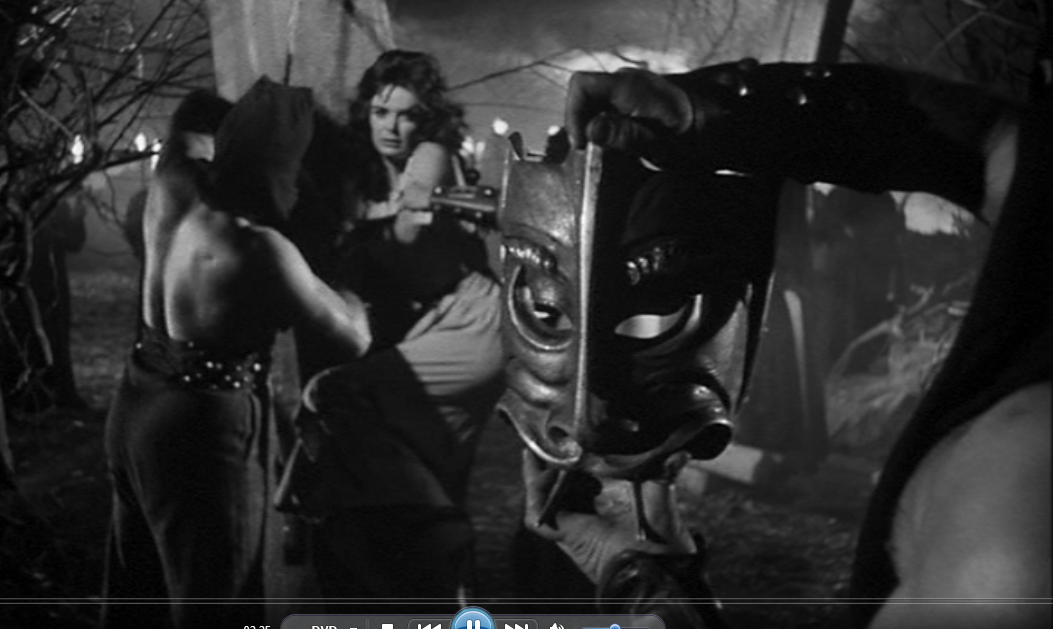
Still from Mario Bava's Black Sunday(1960) featuring English actress Barbara Steele. By the social standards of the early 1960's Black Sunday was considered too gruesome and was banned in the U.K until 1968. Working on a low budget, Italian movie meistro Mario Bava turned Black Sunday into a gothic nightmare of vampires and witches. This black and white film is drenched in ominous shadow, sexually charged and graphically violent for it's time.


Jigoku (1960) Dir. Nobuo Nakagawa. Literally means Hell. A beautifully shot  and harrowing vision of the depths of hell using colour and composition in a unique and surreal way. At the time of its release in Japan Jigoku was recieved with shock and outrage for it's graphic images of punished sinners. Bodies are dissected, flayed and cast into lakes of fire among other things. 


Rise of the Zombies
 The next big film to popularize the splatter subgenre was George A. Romero's 1968 classic Night of the living dead. Which in turn started the craze for Zombie films still prevalent today. Although zombies had been in earlier films, White Zombie 1932 (and considered the first zombie film), I walked with a zombie (1943) and Hammer film productions The Plague of the zombies 1966 ( which bears the closest resemblance to the zombies in Night of the living dead) it was Romero's seminal 1968 film that became the biggest influence on future zombie films.


Stills from Night of the living dead (1968) Dir. George A. Romero


Other important horror B-movies of the 1960's.
I've devised a short list of some other important horror movies made in the 1960's which were to become hugely influential to later film makers.

Eyes without a face (1960) Dir. Georges Franju.
Adapted from Jean Redon's novel about A brilliant surgen  who's beloved daughter Christiane's  face is badly mutilated after a car accident so sets out to kidnap young girls  and transplant there faces onto hers. An early French chiller that set a benchmark for future horror films.


Carnival of Souls (1962) Dir. Herk Harvey.
This independent film made for an estimated $33,000 did not get widespread attention when first released but is now regarded as a cult classic. Set to an eerie organ score and moody atmosphere which became a big influence for George A. Romero when making Night of the living Dead. David Lynch is also cited as being influenced by this film.

Dementia 13 (1963) Dir. Francis Ford Coppola (and writer).
Released by American international Pictures and produced by Roger Corman. This was to be Francis Ford Coppola's first proper directorial debut after having been involved in some minor nudie-cutie films beforehand. Corman offered the chance for Coppola to make this film set in a rural castle in Ireland with funds left over from his last film.


Spider Baby (1968) Dir. Jack Hill (and writer).
Black comedy horror film. Starring Lon (original werewolf) Chaney jr and a young upstart called Sid Haig who went on to become a horror icon in the 00's as the notorious serial killer clown Captain Spaulding in Rob Zombies House of a thousand corpses and The devils rejects.


Horrors of Malformed Men (1969) Dir. Teruo Ishii (and writer).
Banned for decades in it's native Japan and considered a landmark in japanese horror. based on literary works by Edogawa Rampo which attempts to combine horror with bizarre sexuality, a sub-genre known as  "Erotic-Grotesque".
This film is considered a precursor to Toei's ventures into "Pinky Violence" in the early 1970's.


Tuesday, 14 June 2011

Exploitation Films in a nutshell ( Part 1 ). The early years.


Exploitation Film;
1. A film that relies on lurid subject matter for it's appeal.
2. Exploitation films may feature suggestive or explicit sex, sensational violence, drug use, nudity, freaks, gore, the bizarre, destruction, rebellion, and mayhem.
3. A type of film that eschews the expense of "quality" productions in favor of making films on the cheap, attracting the public by exciting their more prurient interests. "Exploitation" is the show business term for promotion, and an exploitation film is one which relies heavily on the lurid advertising of it's contents, rather than it's intrinsic quality of the film.

The early years.
Exploitation film is said to be as old as the invention of the moving picture camera itself. In fact almost any film that has ever been made could be regarded as an exploitation movie to some extent, so with that in mind writing a piece on the history of the exploitation movie is not going to be easy.
Exploitation film making is usually regarded as the period after The motion picture production code was finally enforced by the major film studio's in 1934 (introduced in 1930) after a series of scandals and a vicious campaign beginning in 1933 of the immorality of cinema by the American catholics. It is usually known as the  Hays code  after the chief censor of the time Will H. Hays. Before the code there were no strict regulations so film makers  often used  lurid subject matter in there films. An early example of an exploitation movie is Traffic in souls (1913) directed by George Loane Tucker which is a social commentary on the thriving  New York sex trade of the time. This notorious melodrama was a tremendous box office success yet banned in many American cities due to it's subject matter, although it will probably be remembered  more for the fact that it was the first American produced feature film.


                           Pre-code era.
The pre-code era is usually dated to the start of the sound era in film and up to it's implementation in 1934. Many other films of the pre-code era contained  sexual innuendo, drug use and violence. This was after all the era of the mobster (real life and fictional) and the sexy dominant screen siren.
One film that stands out for it's notoriety more than any other from this period is Tod Brownings Freaks (1932).  Before freaks a  hugely successful director  having directed Bela Lugosi in his iconic film Dracula (1931). Tod Browning was at the time regarded as one of hollywoods finest directors so it came as a big shock when he chose to make freaks. Based on a 1923 novel by Tod Robbins which centers around a circus sideshow of freaks but rather than using costumes and make up decided to cast real life people with deformities. 
Despite massive cuts, the film wasn't received well by the audiences and effectively ended Brownings career in the film industry.


"And for my next trick i shall try and cut my
own head off with a cut-throat razor"
.

(still taken from Freaks (1932).
Post- code era.
It is from this period onwards that forced many film makers away from the strict laws governed by the studio system and into independent film making so as to avoid restricted subject matter imposed by the Hays code.
I must briefly mention that during the post-code era the large studios were still making mobster films and using content with lurid or violent subject matter, but were severely restricted by the production code after 1933. One early example of a mobster movie that came under the censors of the production code was Scarface (1932) directed by Howard Hawks and Richard Rosson. 
Another significant change to happen to the studio system was to occur again in 1948 with what is known as The Paramount decision.  The supreme court was to rule against the monopolization from block-booking of the  'big 5' studios of the time ( Paramount pictures, RKO, Fox, Loew's incorporated and Warner Brothers). Block-booking involved the major studio's selling only A movies with a pool of other films which included B movies that were likely to be less successful. Many of the films were unseen by audiences and caused independent studios to purchase films by blind-buying. As the major studios owned there own theatres they held the exclusive rights as to what films would be shown. The case was challenged and won by the independent film producers and distributers. Consequences of the decision included more independent producers and studios to make their film product free of major studio interference and also saw the weakening of the (Hays) Production code from the rise of independent "art house" theatres which showed foreign or independent films made outside of it's jurisdiction.


Cautionary tales from the 1930's and 1940's.
Dwain Esper is considered the godfather of the exploitation flick. A producer and director who dubbed himself "The king of the celluloid gypsies" from having a carnival background. Esper went from town to town on roadshows, pitching tents and preaching moralistic warnings against subjects like the misuse of drugs and sexual promiscuity, eventually moving on to the next town before the state censorships board turned up. His films were meant to be educational and intended to shock his audience. He ended up buying the rights to Tod Brownings Freaks and showed it as an exploitation film in the 1940's. 
His first exploitation film as director was Narcotic (1933) which tells the story of a heroin addicted doctor who ends up killing himself. Other titles include Maniac (1934), Marijuana (spelt Marihuana) The devils weed (1936) and sex madness (1938).
Esper also worked as an uncredited producer on the unintentionally funny cult classic Reefer madness aka Tell your children (1936) Directed by Louis j. Gasnier. This hilarious romp tells the story of a couple who manage to  turn a bunch of clean cut teenagers  into jazz listening homicidal maniacs after one puff of the deadly 'erb.

Terry has a sudden epiphany about his own existence after breathing in the
ominous cloud of smoke that was gathering around him.
(still taken from Reefer madness 1936).


Probably the most shocking and licentious film of the early post code era is child bride (1938), an educational illustration of the illicit ills of child marriage in the deep south. Inbred, uneducated girls between the ages of ten and fifteen are swapped among middle aged men and groomed into marriage. They are usually eventually discarded and sometimes even killed in order for a younger bride to take there place.
The movie is best known for a scene where the twelve year old actress Shirley Mills is skinny dipping naked. more gratuitous than educational.


B movies of the 1950's.
The 1950's saw a transformation for the exploitation film into what is known as the B movie (although the term had it's roots since the 20's). With the advent of television and the demise of the theatres double feature show which was the staple of hollywoods golden age of the 1930's and 1940's, and changes in the film industry brought about by court rulings and increased production costs for the major studio's a new kind of audience emerged. This was now the golden age of the drive-in-theatres.
Another phenomenon to take place in the late forties and early Fifties was the teenage revolution. It was teenagers that were filling the  drive in theatres  and the exploiters of the time knew exactly how to capitalise on this, and have subsequently done this ever since.


The wild one (1953) directed by Laslo Benedek is an early fifties example of what is termed a "biker Flick" and "social problem film". Marlon Brando's  portrayal of Johnny Strabler the leader of a motor cycle gang has become an iconic image in cinema history.  Stanley Kramer was the producer of the film and had previously given Brando his debut in the film The Men (1950) had been an independent film maker but was now working for Columbia pictures. Due to the subject matter, Kramer had numerous problems with the studio over unacceptable scenes and dialogue  and a bizarre message which was demanded by the production code at the start of the film say's  " This is a shocking story. It could never take place in most American towns but it did in this one. It is a public challenge to not let it happen again". Ohhh scary stuff, teenagers on motorcycles, whatever next??? perhaps werewolves on motorcycles? or even better how about blood thirsty, crack smoking nazi women werewolves on motorcycles?.
So the teenage exploitation market was now in progress and it wasn't long later that James Dean was being created into another rebellious teenage icon in The rebel without a cause (1955). Many more biker films flourished afterwards and subsequently had resurgences in the decades to follow which i shall endeavor to mention when arrived at.

American International
            Pictures.
AIP was a film production company formed in 1956 by James H. Nicholson and Samuel Z. Arkoff. It produced low-budgeted independent films packaged as double features to a mainly teenage audience. They were the firsts to use focus groups to find out what teenagers actually want to watch and even came up with a formula to making movies (the Arkoff formula). They also employed an artist called Albert Kallis to work on there unique eye catching poster designs.


Artwork by Albert Kallis.


So AIP went about in exploiting the lucrative teenage market by producing low-budget movies that catered to the emerging juvenile delinquent's taste, including genres such as Science fiction (alien invasion, disaster, monster and space exploration), horror, war, prison drama,westerns, rock and roll, cars, drag racing and of course motorcycles.


Roger Corman
Roger Corman.

While Nicholson and Arkoff were the executive producers at AIP the main film producers/directors were Alex Gordon and Roger Corman.
With one of the longest list of movie titles to his credit in the history of film making  (after Jess Franco) Roger Corman is without doubt the king of the early B movie. A producer first and then a director his influence on film making is astounding. In his long career he has mostly worked on low-budget films but gained critical acclaim in the 1960's with his larger-budget  series of Edger Allen Poe adaptations starring such names as Vincent Price, Peter Lorre and Boris Karloff. And too a young and aspiring actor by the name of Jack Nicholson.
He worked on a variety of genres and styles and his vision was raw and unpolished, moody and atmospheric. Corman churned out movies at an incredible rate, making feature length films in two or three days and sometimes even two at a time.
AIP (still distributing under there former company ARC) and Cormans first film  as a producer and writer was The fast and the furious (1955) featuring fast cars and girls in danger. And it wasn't long after he was producing and directing, his first films at the helm were westerns, Five guns west (1955) and Apache woman (1955) followed by his first brush with science fiction, The day the world ended (1955). Although versatile in all genres it was to be in the sci-fi genre that Corman would be most associated with in the 50's, and the genre he would also return to in the decades to follow. With such crazy titles such as The beast with a million eyes (1955), The brain eaters (1958) and Attack of the giant leeches (1959) to name but a few.
By the end of the 1950's Corman turned his attention more to the cross genre of sci-fi/horror mixed with comedy. This was also the start of Corman's spoofing of the subjects that he took so seriously at the start of the decade. The first of these type of films was A bucket of blood (1959) starring Dick Miller (that bloke out of gremlins), a film about a sculpter who accidently kills his landlady's cat and covers the body in plaster to hide the evidence. discovering this new method of making sculpter's sets out to create works of art with dead humans. He followed A bucket of blood with another dark comedy The little shop of horrors (1960) also featuring Dick Miller and a very young Jack Nicholson. Allegedly the film was made in two days and one night after a bet which is still a world record for a feature film.


Corman prefered to work quickly, he usually worked on six day shoots and pushed his cast and crew to as many as 50 setups a day, and hated the amount of time wasted at the big studio's. 
When it came to making popular films, Roger Corman was a rare genius. While the old hollywood system was collapsing in the 1950's he knew exactly how to get the teenage audience into the local drive-ins, he knew that they wanted movies that spoke there language and gave them cheap thrills with easy to follow plots that related to current topics of the day including science gone wrong, nuclear scaremongering and rock and roll, and he knew how to make these movies on a tight budget.
Roger Corman is also well known for starting the careers of many A list directors and actors including directors such as Francis Ford Coppola, Martin Scorsese, Peter Bogdanovich and James Cameron. Actors who got there career breaks working with Corman include Jack Nicholson, Peter Fonda, Dennis Hopper and Robert De Niro.


Still taken from The little shop of horrors. Directed by Roger Corman
and featuring a young Jack Nicholson (1960).


Nudity in films.
Nudist films are usually associated with the 1950's and 1960's although roots back to the educational films of the 1930's with directers like Dwain Esper. The first Non pornographic American film to feature a naked woman went back to as early as 1915 in Inspiration starring Audrey Munson.
Nudist films were meant to depict the lifestyle of people in the naturalist movement but were really made for the commercial exploitation of the female nude. An early example of this type of film is Garden of Eden (1954) by writer and directer Max Nosseck. The most productive producer/director of the nudist camp films was actually a women called Doris Wishman who in the early 1960's made a series of nudist films, she even crossed genres with sci-fi sexploitation in the hilariously bad film Nude on the moon (1961). Wishman went on to pioneer what was known as "roughie" sexploitation. The first non-naturist type of film to feature nudity was The Immoral Mr. Teas (1959) by Russ Meyer and widely considered the first pornographic feature film.
The early 60's films of Wishman and directors like Meyer were known as "Nudie-cuties" and were specifically made for the new type of Grindhouse theatres that were theatres previously used for burlesque shows where 'bump and grind' dancing and striptease were featured. The original Grindhouse theatres are located on 42nd street in New York city. It was the introduction of television and the closure of many of the single screen movie theatres built in the cinema boom of the 1930's that brought about the introduction of the grindhouse theatre. It was in the 1970's that these types of theatres were generally known for there showing of exploitation movies.
Another director to start his movie making career making "Nudie-cutie" films was Herschell Gordon Lewis. Along with exploitation producer David F. Friedman he would eventually go on to  create a new sub-genre of horror film known as the "splatter film" and along with Russ Meyer change the face of independent movie making for ever, which will be the starting topic of my next episode on Exploitation movies in a nutshell.